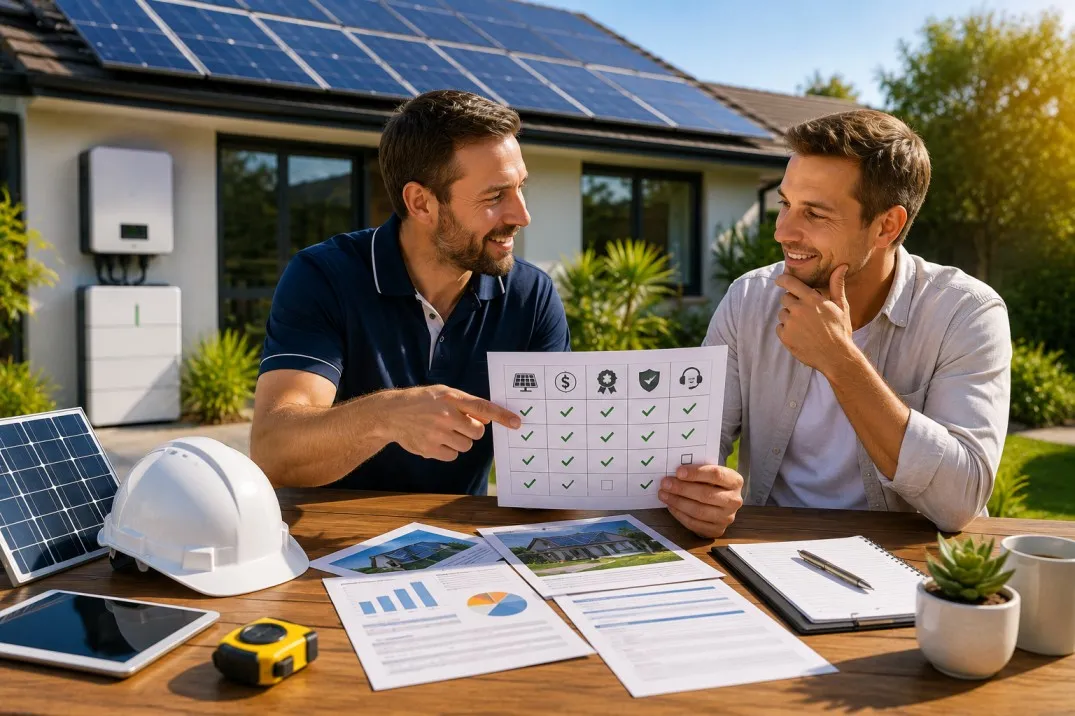
Installing rooftop solar is a significant investment for many Australian households and businesses. A well-designed system can help you use renewable energy generated on your property, reduce reliance on grid electricity and potentially lower energy costs over the system’s operating life.
However, solar panels are only one part of the equation. The provider responsible for assessing, designing and arranging your installation can have a major influence on the overall experience and long-term performance of the system.
Choosing a solar panel installation company should therefore involve more than comparing the cheapest advertised package. Credentials, equipment quality, system design, warranties, transparency and after-sales support all deserve careful consideration.
If you are comparing solar providers in Australia, the following nine factors can help you make a more informed decision.
1. Compare Relevant Credentials and Industry Standards
One of the first things to investigate is whether a solar provider operates within the relevant Australian industry and regulatory frameworks.
Solar installation involves specialised electrical work, and different requirements can apply to retailers, designers and installers. It is important to understand who will design the system, who will carry out the installation and which licences or accreditations apply to the work.
Australia’s solar accreditation arrangements have also changed over time, so homeowners should rely on current information rather than outdated claims.
The Australian Government’s Solar Consumer Guide provides independent guidance on choosing a reputable solar retailer or installer, comparing options and understanding the installation process. It also explains that New Energy Tech Consumer Code-approved sellers meet consumer protection standards covering areas such as sales, quotes, contracts, installation, warranties and support.
When comparing a solar panel installation company, ask the provider to clearly explain the credentials relevant to your project. A reputable business should be comfortable answering these questions without relying on vague accreditation claims.
2. Look at How Each Company Designs Its Solar Systems
Not every property needs the same solar system.
A household with high daytime electricity consumption may have different requirements from one where most electricity is used in the evening. Roof orientation, shading, available installation space and existing electrical infrastructure can also affect system design.
For this reason, be cautious about providers that immediately recommend the same standard package without first learning about your property and energy usage.
A good solar panel installation company should consider your electricity consumption, roof characteristics, current requirements and reasonable future plans before recommending a system.
System size should also be explained clearly. Bigger is not automatically better, and smaller is not always more economical over the long term. The goal should be to find an appropriate balance between available roof space, expected solar generation, electricity consumption and budget.
Ask each provider why they have recommended a particular system size. Comparing their explanations can tell you a great deal about the quality of their approach.
3. Compare Quotes Beyond the Final Price
Price is important, but the cheapest quote does not necessarily represent the best overall value.
Two solar quotes that appear similar at first may include very different equipment, installation scopes, warranties and support arrangements.
Start by checking the exact solar panel and inverter models included in each proposal. Look at the total system capacity and whether additional electrical or switchboard work is included.
You should also check whether the quote clearly explains installation costs, connection arrangements, monitoring equipment and any other potential charges.
The Australian Government advises consumers to compare quotes carefully and understand what is included before committing to a solar retailer or installer.
When evaluating a solar panel installation company, compare like with like wherever possible. A slightly higher upfront price may represent different equipment or a broader service scope, while a lower quote may exclude items you assumed were included.
Transparency matters more than simply finding the lowest number.
4. Investigate the Solar Panels and Inverters Being Offered
The equipment used in a solar system can influence performance, reliability and long-term ownership.
Solar panels and inverters are available from many manufacturers, with differences in efficiency, warranties, specifications and manufacturer support. Rather than focusing only on brand recognition, examine the actual products included in each proposal.
The Clean Energy Council maintains lists of approved solar PV modules, inverters and certain battery products that meet relevant Australian and international standards for use in eligible solar and storage systems. You can review information through the Clean Energy Council approved products program when researching proposed equipment.
Ask each provider why they recommend particular products and how those components suit your property.
A reliable solar panel installation company should be able to explain product differences in straightforward language. Technical specifications are useful, but they should be connected to practical considerations such as compatibility, warranty coverage and expected system performance.
5. Examine Warranty Coverage Carefully
Solar systems can involve several different warranties, so it is important not to treat “the warranty” as a single document.
Solar panels may have separate product and performance warranties. Inverters generally have their own manufacturer warranty, while installation workmanship may be covered separately.
If batteries or EV charging equipment are included, additional warranty terms may apply.
When comparing providers, ask exactly who is responsible for each warranty and what happens if you need to make a claim.
Find out whether the solar panel installation company will assist with manufacturer warranty issues or whether you would need to contact the manufacturer directly. Ask whether labour associated with replacement work is covered and whether there are exclusions you should understand.
Warranty length is only one consideration. Clear terms, accessible support and a straightforward claims process can be just as important.
Keep copies of quotations, contracts, product specifications, serial numbers and warranty documents after installation. Good record keeping can make future enquiries considerably easier.
6. Compare Customer Service and Communication
The way a company communicates before you sign a contract can provide useful insight into the service you may receive later.
Does the provider answer questions clearly? Are recommendations explained rather than simply presented as the only option? Are you given enough time to review the proposal?
Solar can involve unfamiliar terminology, including kilowatts, kilowatt-hours, inverter capacity, exports and energy storage. A good provider should make these concepts easier to understand rather than using technical language to pressure a customer into making a quick decision.
Communication also matters after installation.
A quality solar panel installation company should provide a clear pathway for customers who need assistance with monitoring, system operation, warranty enquiries or future upgrades.
Ask who your point of contact will be after the system is installed. Understanding the support process before signing a contract can help prevent frustration later.
7. Consider Experience With Batteries, Off-Grid Systems and EV Charging
Even if you only want solar panels today, your energy requirements may change.
Battery storage is becoming an increasingly important consideration for households that want to store excess solar generation for later use. Electric vehicles can also significantly change household electricity consumption and charging patterns.
Some properties may eventually require expanded solar capacity, while rural or specialised sites might benefit from off-grid or hybrid energy solutions.
Choosing a solar panel installation company with broader renewable energy experience can be useful if you expect your system to evolve.
This does not mean you should install every available technology immediately. In fact, a good provider should avoid recommending unnecessary equipment.
Instead, ask whether the proposed solar system has been designed with realistic future requirements in mind. If you plan to add a battery or EV charger later, discuss this before the initial installation.
Planning ahead may help avoid unnecessary complexity when expanding your energy system in the future.
8. Look at Installation Quality and Ongoing Maintenance
High-quality solar panels cannot compensate for poor installation.
Panel placement, mounting, cabling, inverter location and electrical work all contribute to the overall quality and safety of a solar system. The installation should follow applicable requirements and manufacturer instructions.
Ask who will perform the installation and how the company manages installation quality.
You should also understand what happens after commissioning. Homeowners should receive appropriate system documentation and instructions for monitoring and operating their system.
Solar systems may also benefit from periodic inspection and maintenance. The Australian Government advises that solar servicing should be carried out by an appropriately accredited solar installer or qualified electrician and recommends checking system documentation for suitable maintenance requirements.
When comparing a solar panel installation company, ask what guidance is provided after installation and how customers can obtain support if system performance appears unusual.
A company’s responsibility should not feel as though it ends the moment the panels are switched on.
9. Consider Long-Term Value Rather Than Short-Term Savings
Solar is generally a long-term investment, so comparing providers based only on upfront price can overlook important factors.
Consider the expected lifespan of major components, warranty coverage, installation quality, monitoring options and ongoing support.
Also think about how your energy requirements could change.
You may purchase an electric vehicle, install a battery, add air conditioning, work from home more often or increase the number of people living at the property. These changes can affect how much electricity you consume and when you use it.
A good solar panel installation company should discuss realistic future needs while avoiding unnecessary oversizing.
Long-term value comes from selecting an appropriately designed system using suitable components, supported by professional installation and accessible customer service.
The best comparison is therefore not simply “Which company is cheapest?” but “Which proposal provides the most appropriate overall solution for my property and energy goals?”
Why Local Knowledge Can Matter
Solar conditions and installation considerations can vary between regions.
For homeowners on the Gold Coast and elsewhere in Queensland, local climate conditions, roof characteristics and household cooling demands may influence system design.
A provider familiar with the local area may also have practical experience with common property types and installation conditions.
However, location alone should never be the deciding factor. Local experience should be considered alongside credentials, equipment quality, system design, warranties and customer support.
When comparing providers, ask for an explanation of how the proposed design reflects your specific property rather than relying solely on general assumptions about the region.
Questions to Ask Before Making Your Decision
Before choosing a provider, prepare several questions and ask each company the same ones. This can make comparisons easier and reveal differences that may not be obvious from the initial quotes.
Ask why the proposed system size is appropriate for your electricity consumption. Confirm the exact solar panels and inverter being supplied and ask why those products were selected.
Find out who will complete the installation, what relevant credentials apply and what warranties cover the equipment and workmanship.
Ask whether there are additional costs that are not included in the initial quote.
You may also want to discuss future battery storage or EV charging, even if you do not intend to install these technologies immediately.
Finally, ask what happens if you need support after installation.
Clear and specific answers can help distinguish a transparent provider from one that relies primarily on sales claims.
Frequently Asked Questions
What should I look for in a solar panel installation company?
When comparing a solar panel installation company, consider relevant credentials, system design, product quality, transparent pricing, warranty coverage, installation standards and after-sales support. The company should also take time to understand your property and electricity consumption before recommending a system.
How many quotes should I get before choosing a solar panel installation company?
Obtaining multiple quotes can help you compare system designs, equipment and pricing. Rather than focusing only on the final cost, compare what each proposal includes and why each company has recommended its particular system.
Should a solar panel installation company assess my electricity usage?
Yes. Electricity consumption is an important factor in solar system design. A provider should consider how much electricity you use, when you use it and any realistic future changes that could affect your energy requirements.
Does the cheapest solar panel installation company offer the best value?
Not necessarily. A cheaper quote may differ in equipment, installation scope, warranties or support. Long-term value should be assessed by considering the complete system and service rather than upfront price alone.
Should I consider batteries when choosing a solar panel installation company?
Even if you are not installing a battery immediately, it can be useful to discuss future storage plans. Understanding whether the proposed solar system can accommodate future battery storage may help you make a more informed long-term decision.
Making the Right Solar Choice
Comparing solar providers requires more than checking prices and panel brands. A homeowner or business should consider credentials, tailored system design, transparent quotations, product suitability, warranty protection, installation quality, customer service and future energy requirements before choosing a solar panel installation company. Taking the time to compare these factors can help you select a solution that suits both your current needs and longer-term energy plans. For homeowners and businesses seeking tailored renewable energy solutions on the Gold Coast, Energy Solution Centre provides residential and commercial solar, battery storage, off-grid solar and EV charging solutions from its location at 19 Price St, Nerang QLD 4211. To discuss a system suited to your property, call 1300 217 079 or visit the Energy Solution Centre website for more information.